


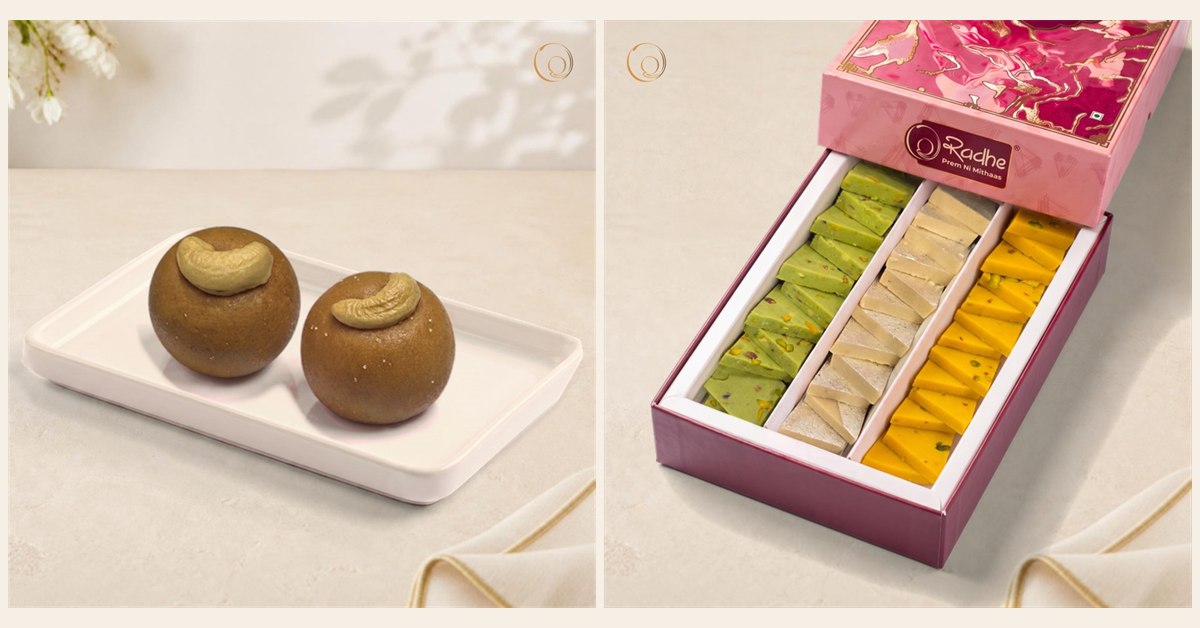
In Gujarat, Diwali preparation starts weeks before the festival. Homes are cleaned and painted, rangoli colours are bought, and kitchens smell of ghee as families make the Diwali nasto: trays of sweets and crisp savoury snacks for the guests who visit over the new year.
This guide explains where Diwali comes from, why sweets are part of every day of the festival, and lists the Gujarati Diwali sweets and nasta that fill those trays.
What Is Diwali, and Why Is It Celebrated?
Diwali, or Deepavali, comes from the Sanskrit words deepa (lamp) and avali (row): a row of lamps. It falls on the new moon night (Amas) at the end of the month of Aso in the Gujarati calendar. That is why, in Gujarat, Diwali closes the old year, and the new year begins with Bestu Varas right after it. In 2026, Diwali falls on Sunday, 8 November.
Different stories are told about the festival. All of them are about light winning over darkness:
- The return of Lord Rama. In the Ramayana, Rama returns to Ayodhya with Sita and Lakshmana after fourteen years of exile and the defeat of Ravana. The people light rows of lamps to welcome them home.
- Goddess Lakshmi. The goddess of wealth and prosperity is worshipped on Diwali night. Many accounts say she rose from the churning of the ocean, the Samudra Manthan.
- Lord Krishna. In many parts of India, the day before Diwali marks Krishna’s victory over the demon Narakasura.
- Jain and Sikh Diwali. Jains mark the nirvana of Lord Mahavira on Diwali, and Sikhs celebrate Bandi Chhor Divas, the release of Guru Hargobind from Gwalior Fort.
Diwali also comes after the monsoon harvest. With new grain at home and the year’s trade coming to a close, it has long been a time to give thanks, close the old accounts, open new account books and share food with neighbours. Sanskrit texts written more than a thousand years ago already describe a festival of lamps in this season.
How Did Sweets Become Part of Diwali?
Sweets have been part of Diwali for as long as anyone remembers. A few reasons come up again and again:
- An offering first. On Diwali night, families offer sweets to Goddess Lakshmi during the puja, and then share them as prasad.
- Thanks for the harvest. Ghee, milk, sugar, jaggery and flour were once kept for special days. Making rich sweets after the harvest was a way to celebrate a good year.
- A sweet start to the new year. In Gujarat, every guest who comes to say “Saal Mubarak” or “Nutan Varshabhinandan” is offered sweets, nasta and mukhwas.
- Sharing with neighbours. Families send plates or boxes of mithai to neighbours, relatives and colleagues. Today’s Diwali gift box grew from this custom.
- Made to last the festival. Diwali sweets and nasta are cooked in ghee or oil and kept dry, so one round of cooking lasts through a week of visits.
The Days of Diwali in Gujarat, from Vagh Baras to Labh Pancham
In Gujarat, the celebrations start with Vagh Baras and run until Labh Pancham. Calendars can differ by a day, so check your local panchang for the exact dates.
- Vagh Baras: the festival begins. Many families worship the cow and calf on this day.
- Dhanteras (Dhan Terash): Lakshmi puja for wealth. Many families buy gold, silver or new utensils, and sweets are offered in the puja.
- Kali Chaudas: a day of prayers for protection from evil.
- Diwali: Lakshmi Puja at home, and Chopda Pujan in shops and offices, where traders worship their new account books. Lamps, rangoli and fireworks light up the night.
- Bestu Varas, the Gujarati New Year: people visit elders, relatives and friends, and trays of sweets, nasta and mukhwas are set out for every visitor. Temples offer Annakut, a “mountain of food” made of many dishes, recalling how Lord Krishna lifted the Govardhan hill to shelter the people of Vraj.
- Bhai Bij: sisters welcome their brothers home with a meal and sweets.
- Labh Pancham: shops and offices reopen, and the business year begins.
Gujarati Diwali Sweets List
These are the sweets many Gujarati homes make or buy for Diwali. Where we make one, its name links to it.
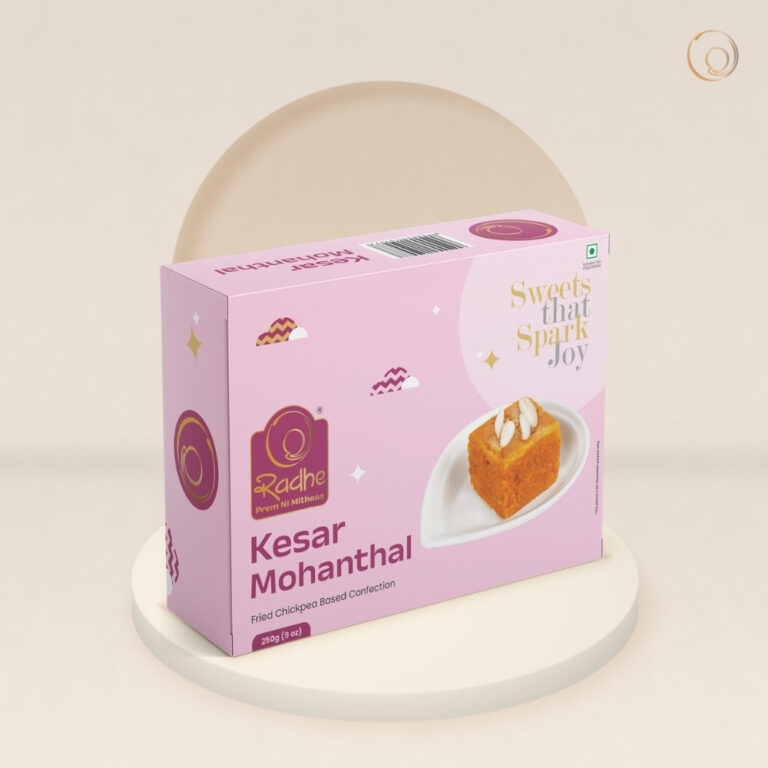
1. Mohanthal
Gram flour (besan) roasted slowly in ghee, set with sugar syrup and flavoured with cardamom, saffron and nuts, then cut into squares. It appears at almost every Gujarati festival, and its name is often linked to Mohan, a name of Lord Krishna. Try our Kesar Mohanthal.
2. Ghughra
Crescent-shaped fried pastries filled with roasted semolina or mawa, coconut, dry fruits and sugar. Ghughra is Gujarat’s version of the gujiya; read more in What is Gujiya.
3. Magas
Coarse gram flour roasted in ghee and sweetened, then set in a tray or shaped into laddus. Try our Magas Laddu (Besan Laddu).
4. Kaju Katri
Thin diamonds of cashew and sugar, often finished with silver varakh. It is a Diwali favourite across India and the base of many gift boxes. Choose from Kaju Katri, Kesar Kaju Katri, Jaggery Kaju Katri, Sugarless Kaju Katri, or the Assorted Katri Gift Box.
5. Penda
Milk cooked down to mawa and sweetened. Thabdi Penda is the brown, grainy penda of Gujarat; Kesar Rajwadi Penda and Malai Penda are softer. Milk sweets keep only a few days, so buy them close to the day and keep them in the fridge.
6. Halwasan
A sweet from Khambhat, made with broken wheat, milk, ghee and sugar and flavoured with nutmeg and cardamom. Try our Halwasan.
7. Churma Laddu and Motichoor Laddu
Churma laddu is made from coarse wheat flour, ghee and jaggery or sugar; motichoor laddu from tiny drops of fried gram flour batter soaked in syrup. Try our Churma Laddu and Motichoor Laddu.
8. Basundi
Milk simmered until thick, sweetened and flavoured with cardamom, saffron and nuts. It is often served at the new year meal.
9. Soan Papdi
Flaky, melt-in-the-mouth layers of gram flour, ghee and sugar, widely given as a Diwali gift. Try our Soan Papdi.
10. Dry Fruit Sweets
Kaju rolls, anjeer slices and dry fruit laddus have become a Diwali gifting staple. See our Dry Fruit & Sweets Boxes and Premium Packed Sweets.
Gujarati Diwali Nasta List
Nasta, or farsan, is the savoury half of the Diwali tray: dry, crisp snacks that keep in a tin for the whole festival.
1. Mathiya
Thin, crisp discs made from moth bean (math) flour, usually with some urad flour, seasoned with ajwain and black pepper, rolled out like papad and fried. Many families roll mathiya together in the days before Diwali.
2. Chorafali
Light, puffed strips made from chickpea flour and urad flour, fried and dusted with red chilli powder and black salt.
3. Farsi Puri and Methi Puri
Flaky, crisp puris seasoned with black pepper and cumin; methi puri adds fenugreek leaves. Suvali are a thinner, crisp puri also made for Diwali. Try our Mini Farsi Puri, Methi Puri, Masala Puri.
4. Chakri
Crunchy spirals pressed from a spiced flour dough and fried. Try our Wheat Chakri.
5. Chevdo
Flattened rice (poha) with peanuts, curry leaves and spices. Try our Nylon Pouva Chevda or the Kolhapuri Dry Fruit Chevda.
6. Sev and Ganthiya
Gram flour noodles in every thickness, from fine sev to thick ganthiya. Try our Ratlami Sev, Jadi Tikhi Sev, Nylon Ganthiya, or browse our Gujarati namkeen.
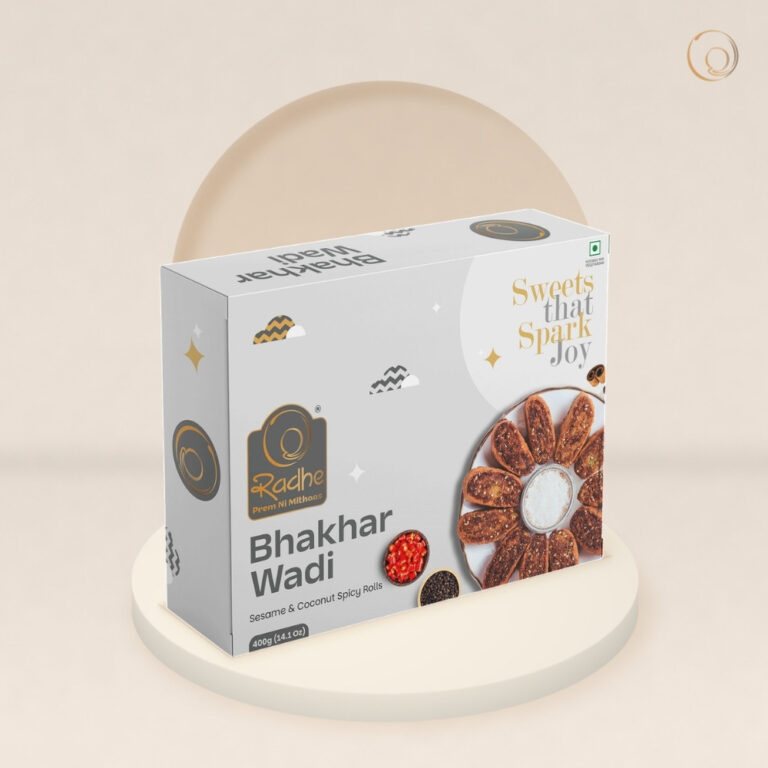
7. Bhakharwadi
Rolled spirals of spiced dough, sweet, tangy and spicy at once. Try our Bhakharwadi and Mini Bhakharwadi.
8. Nankhatai
Cardamom shortbread biscuits, a favourite with tea during new year visits. Try our Atta Nankhatai Biscuit.
9. Mukhwas
After the snacks, a bowl of mukhwas goes round: dhana dal, variyali and paan mukhwas. See our Mukhwas range and our guide to popular mukhwas.
How to Set a Gujarati Diwali Tray for Guests
- Two or three sweets: a ghee sweet such as mohanthal or magas, a kaju sweet, and a milk sweet only if it will be eaten the same day.
- Three or four nasta: something thin and crisp (mathiya or chorafali), a puri, chevdo, and sev or bhakharwadi.
- Dry fruits: cashews, almonds and pistachios. A dry fruit tray makes this easy.
- Mukhwas to finish.
Short of time? Hampers such as the Gujarati Snack House Hamper and the Sweet & Namkeen House Hamper put sweets and nasta in one box. See all our Diwali Gifts, or our Diwali gift box ideas.
How Long Do Diwali Sweets and Nasta Keep?
- Dry fried nasta such as mathiya, chakri, sev and chevdo: one to two weeks in an airtight tin, away from moisture.
- Ghee sweets such as mohanthal and magas: about 7–10 days in an airtight box at room temperature.
- Milk sweets such as penda and basundi: a few days, in the fridge.
- Sealed packs: until the best-before date printed on the pack.
More in our guide on how to store different types of sweets.
Frequently Asked Questions
Which sweets are made for Diwali in Gujarat?
Mohanthal, ghughra, magas, kaju katri, penda, halwasan, churma laddu and basundi are the sweets many Gujarati families make or buy for Diwali.
What is Diwali nasta?
Diwali nasta is the set of dry, crisp savoury snacks made for the festival, such as mathiya, chorafali, farsi puri, chakri, chevdo and sev, served to guests over the new year.
Why do we eat sweets on Diwali?
Sweets are offered to Goddess Lakshmi in the Diwali puja and then shared as prasad. They also mark thanks for the harvest and a sweet start to the new year, and sharing them with neighbours and relatives is part of the festival.
When is Diwali in 2026?
Diwali (Lakshmi Puja) falls on Sunday, 8 November 2026. Check your local panchang for the dates of Dhanteras, Bestu Varas and the other days.
Read more: famous sweets of Gujarat and how sweets turn Indian festivals into celebrations.
Order Gujarati Diwali sweets and nasta
- Kesar Mohanthal
- Magas Laddu (Besan Laddu)
- Kaju Katri
- Thabdi Penda
- Bhakharwadi
- Mini Farsi Puri
- All Gujarati namkeen
- Diwali Gifts
Order online from Radhe Prem Ni Mithaas, delivered anywhere in India.