


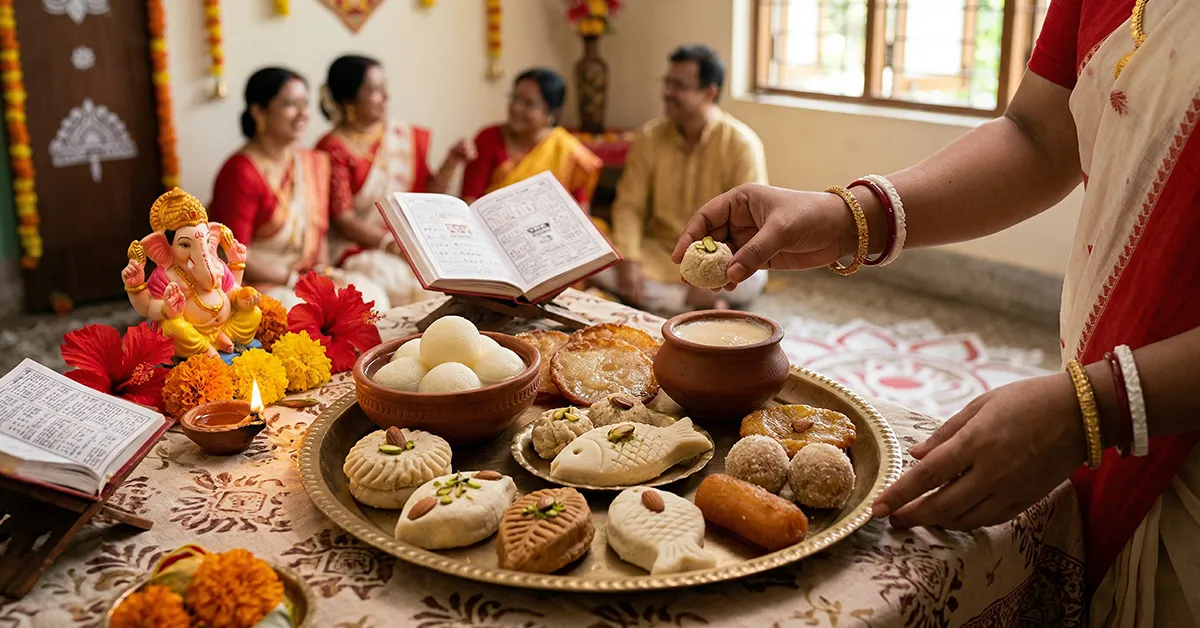
Every year around April 15, West Bengal wakes up in white and red. Streets fill with the sound of dhak drums, the smell of fresh flowers, the rustle of new clothes, and the extraordinary abundance of the Bengali table. Poila Boishakh, the Bengali New Year is one of the most joyful and culturally rich festivals in India, and food is absolutely at the heart of it.
For Bengalis everywhere in Kolkata, in diaspora communities across the country, in families that have carried their traditions thousands of kilometres from home, Poila Boishakh is a day that is felt through flavour. The specific sweets of this festival carry the weight of memory, identity, and the particular sweetness of a new beginning.
What is Poila Boishakh?
Poila Boishakh is the first day of the Bengali calendar, Boishakh being the first month. It is celebrated on every 15th of April month, coinciding with Baisakhi in Punjab and Vishu in Kerala, all of which mark the solar new year across different Indian traditions. The word “poila” simply means “first.”
The festival is marked by morning processions (Prabhat Pheri), visits to temples, cultural programmes filled with Rabindra Sangeet and classical music, and the wearing of traditional Bengali dress, white sarees with red borders for women, white kurta-pajamas for men. But above all, Poila Boishakh is a day of feasting and sweet-sharing.
In Bengal’s business community, Poila Boishakh marks the beginning of the new financial year. Shop owners conduct a special puja called Haal Khata in which new account books are opened and sweets are distributed to customers and well-wishers as a gesture of goodwill and auspiciousness. This tradition of distributing sweets at the start of a new year of business is beautiful in its simplicity and deeply meaningful in its intent.
The Sweets of Poila Boishakh
Mishti Doi — sweet yogurt set in earthen pots is perhaps the most iconic Bengali sweet, and it has a special presence on the Poila Boishakh table. Made by slowly reducing sweetened milk and culturing it in traditional clay matka pots, mishti doi has a distinctive tangy-sweet flavour and a thick, creamy texture. The earthen pot itself is part of the experience, it absorbs moisture and gives the doi a slightly grainy, almost caramelised note around the edges.
Sandesh is the other great Bengali mithai, and no Poila Boishakh celebration is complete without it. Made from fresh chenna (cottage cheese) that has been kneaded and sweetened, sandesh is a pure, clean sweet — delicate in flavour, elegant in appearance, and capable of infinite variation. Kesar sandesh, nolen gur sandesh (made with date palm jaggery), and khejur sandesh are all popular Poila Boishakh varieties. The best sandesh in Bengal is extraordinarily light, barely sweet, with the clean freshness of new milk at its heart.
Rasgulla may be the most famous Bengali sweet outside of Bengal, but on Poila Boishakh it is eaten with particular pride as an assertion of identity and tradition. Soft, spongy, soaked in light sugar syrup, a well-made rasgulla is one of the pleasures of Indian food at its most refined. The Bengal vs Odisha debate over rasgulla’s origin is a passionate one, but on Poila Boishakh, every Bengali simply claims it as their own.
Pantua and Lyangcha are deep-fried Bengali sweets similar to gulab jamun but with their own distinct character. Made from chenna and flour, fried to a deep brown, and soaked in sugar syrup, these sweets have a slightly denser texture and a more pronounced fried note than their North Indian cousin. They are a festive favourite and an unmistakably Bengali contribution to Indian mithai.
Nolen Gur Barfi — made with the distinctly seasonal date palm jaggery of Bengal is a winter and spring specialty that sometimes makes an appearance at early Poila Boishakh gatherings. Nolen gur has an extraordinary smoky-caramel flavour that cannot be replicated by any other sweetener, and sweets made with it carry a seasonal urgency: they are available for only a few months of the year.
Sweets as Cultural Memory
For Bengalis living outside West Bengal and there are millions of them, across every major Indian city — Poila Boishakh is a day when the distance from home is felt most acutely. And the way that distance is most often bridged is through food. A box of sandesh sent from Kolkata to Chennai. A mishti doi purchased from a Bengali sweet shop in Bengaluru. A plate of rasgulla prepared at home from memory.
This is the power of festive sweets, they carry the flavour of a place and a time, and eating them, wherever you are, brings you back. If you have Bengali friends or colleagues, sending them a box of Indian sweets on Poila Boishakh is a gesture they will appreciate deeply.
Gifting on Poila Boishakh
The Haal Khata tradition of distributing sweets at the start of the new business year has evolved into a broader culture of gifting on Poila Boishakh. Sweet box hampers combining Bengali-style sweets with premium dry fruit varieties are increasingly popular as Poila Boishakh gifts for clients, partners, and family members.
A thoughtfully assembled box that acknowledges the occasion while offering universally loved Indian mithai strikes exactly the right note.
Celebrate every festival with the taste of tradition. Prem Ni Mithaas brings you freshly made Indian sweets and hampers for Poila Boishakh and every celebration — delivered fresh across India.