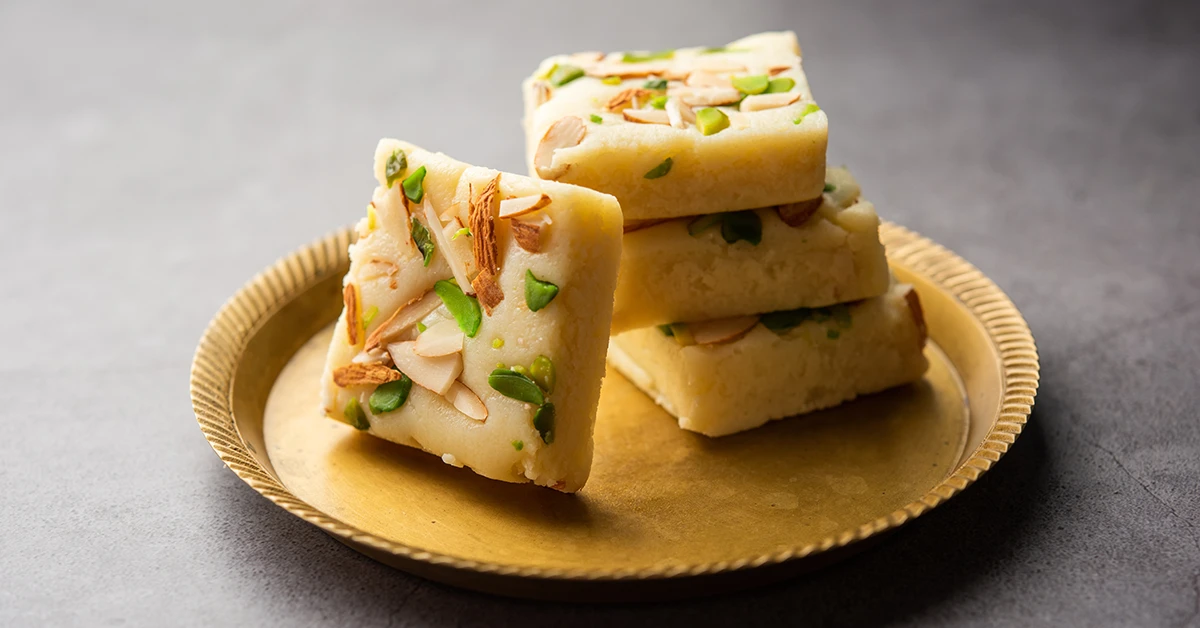
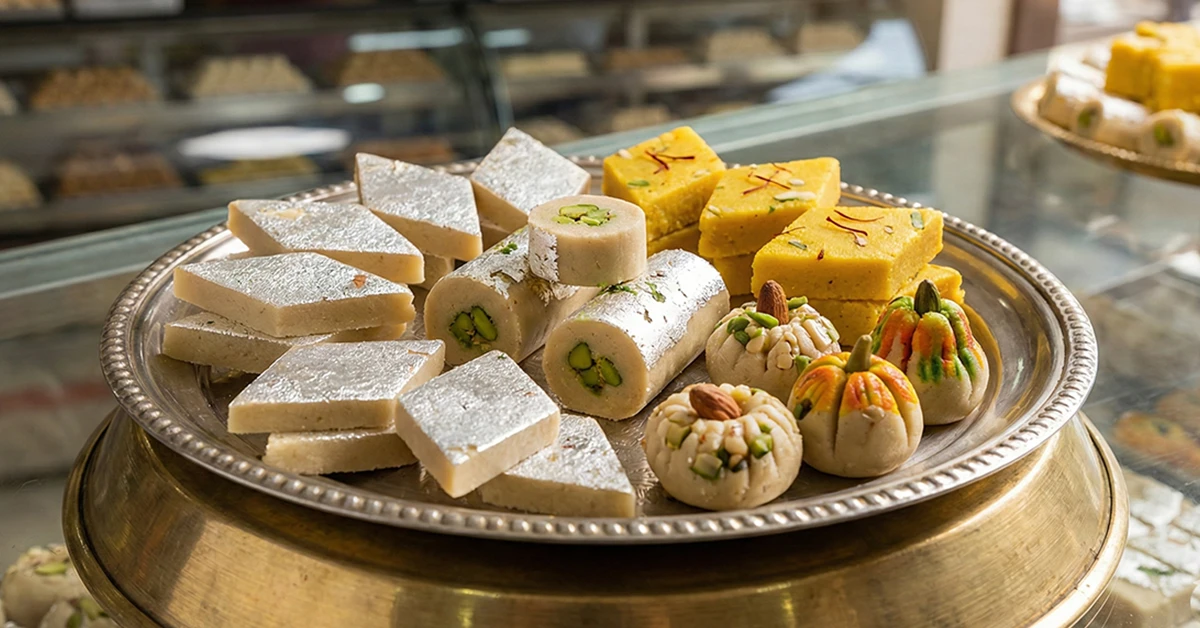
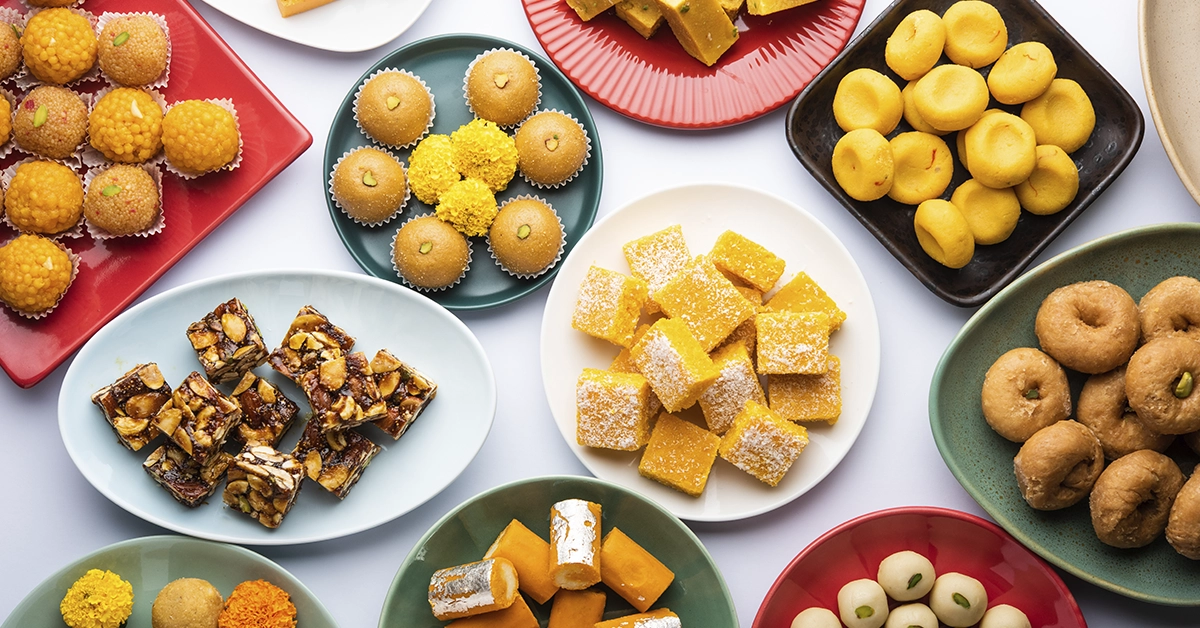
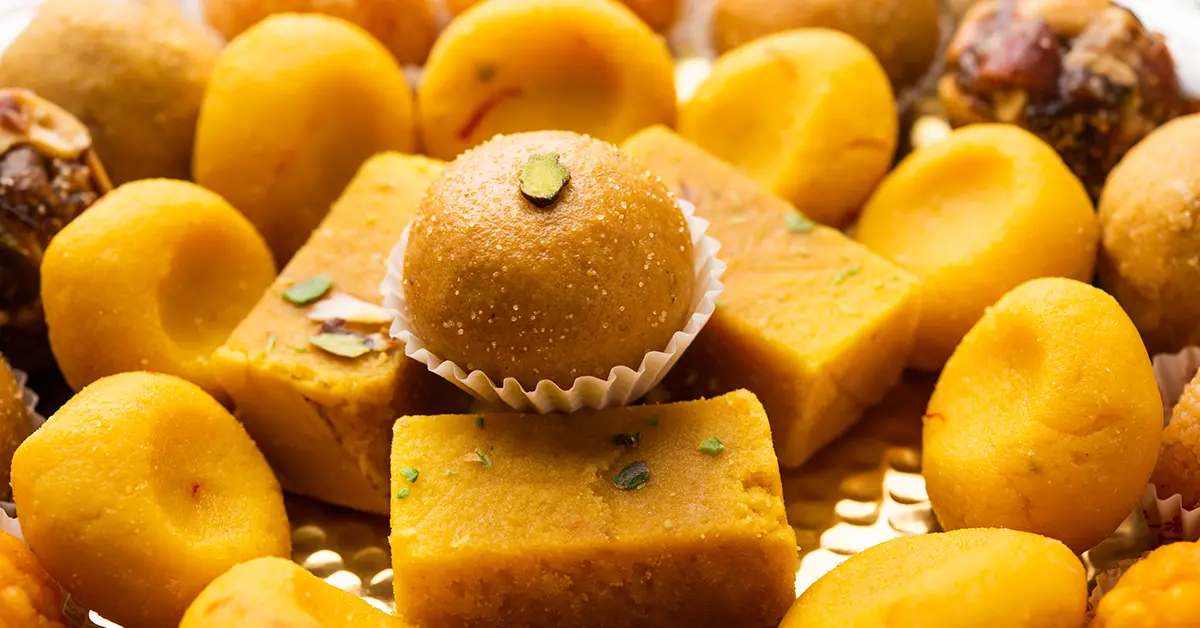
Barfi is one of the best milk-based Indian sweets where milk solids, sugar, and aromatic spices are cooked together until they thicken into a fudgy mixture that melts in your mouth. India offers multiple types of barfi sweet with different bases like besan, kaju, khoya, milk powder, each with unique flavors and textures that vary by region and ingredient choices. Barfi remains a top choice for many because of its fudge-like texture and rich milk base. You will find that these barfi sweets vary significantly from one region to another based on local ingredients. Some people prefer traditional recipes while others look for modern fusion flavors like chocolate or fruit. Choosing the right type of barfi for your occasion depends on your taste preferences and the specific dietary needs of your guests. Don’t understand which type to choose for your celebration? No worries, this guide covers 10 barfi varieties you must try. Let’s dig in. What Differentiates One Barfi Type From Another? What makes barfi varieties different? The main differences come from base ingredients (khoya, milk powder, nuts, flour), flavorings (cardamom, saffron, cocoa, fruits), and cooking methods. Milk solid barfis (mawa) create buttery textures. Flour-based ones turn crumbly. Nut-based versions stay firm and smooth. Besides base, preparation time varies. Traditional barfis need 20-30 minutes of stirring, while modern ice cream versions finish in 15 minutes. Both deliver great taste but serve different occasions and convenience levels. 10 Types of Barfi Available in India 1. Besan Barfi What is besan barfi made of? Besan barfi is made from roasted gram flour (besan), ghee, sugar, and dry fruits like almonds and pistachios. The roasted gram flour gives it an earthy, warm flavor with a distinctive aroma that fills your kitchen instantly. This traditional variety has been made in Indian homes for generations and appears in nearly every sweet shop across the country. The texture is soft and crumbly, completely different from smooth, fudgy versions. During Diwali and Holi, besan barfi sells best. It’s budget-friendly, simple to make at home, and universally loved. 2. Coconut Barfi What is coconut barfi? Coconut barfi (nariyal barfi) uses fresh or desiccated coconut cooked with milk and sugar into a firm, white confection popular in Goa, Karnataka, Tamil Nadu, and Kerala. Coconut itself provides natural sweetness, requiring less added sugar than flour or milk powder barfis. Condensed milk or full-fat milk intensifies creaminess. The white appearance and coconut aroma appeal to both your senses. Coastal regions favor this variety because coconut grows abundantly there. 3. Badam Barfi Badam barfi tastes rich and subtle with finely ground almonds, sugar, and spices like cardamom and saffron. The almond cost makes each piece feel premium compared to cashew or gram flour barfis. The slight nuttiness pairs perfectly with aromatic spices. This variety graces weddings and special occasions where taste and presentation both matter. Almond’s natural oils create a moist, luxurious texture without requiring additional ghee. 4. Pista Barfi Pistachio barfi’s green color comes directly from ground pistachios, not artificial food dyes. The flavor is sophisticated and subtle, getting more interesting with each bite. Unlike many sweets using coloring agents, pista barfi’s hue reflects its premium ingredient quality. Careful cooking preserves both color and flavor. Many sweet shops feature this as a special, high-end item, emphasizing its premium status in the barfi lineup. 5. Chocolate Barfi Chocolate barfi blends traditional Indian milk-based sweet-making with modern cocoa flavors. The most common method uses a double-layer approach: a plain barfi base (from khoya or milk powder) with a chocolate layer on top made from cocoa powder, mawa, and sugar. Some use condensed milk for faster cooking. The chocolate top creates beautiful contrast. Kids and adults both love this fusion. Preparation takes under 30 minutes total. 6. Cream Barfi Cream barfi mixes full-fat cream into the traditional milk powder base, creating an incredibly soft, velvety texture that’s richer than standard versions. Cardamom or kewra essence adds aromatic lift. The cream barfi addition requires less stirring time than traditional milk powder barfis. It works perfectly at upscale gatherings where serving something special matters. 7. Choco Strawberry Barfi Choco strawberry barfi is made by melting strawberry ice cream, mixing with milk powder, cooking for 15 minutes while stirring, then topping with melted chocolate. The pink-and-dark-chocolate appearance looks Instagram-worthy. Total preparation time is 15-20 minutes, making it perfect for unexpected guests. The ice cream method skips traditional lengthy stirring. This modern fusion offers convenience without sacrificing taste or presentation at parties and gatherings. There are other recipes as well to make this particular type of barfi. 8. Mawa Barfi Mawa (khoya) is milk reduced by slow cooking until it becomes thick, solid milk fat. Mawa barfi cooks this ingredient with sugar and ghee until it reaches a fudgy consistency. The texture is buttery and dense, completely different from milk powder barfis. The creamy, indulgent taste means it gets eaten quickly after serving. Traditional sweet shops prepare it fresh daily because it hardens during storage. Mawa’s fat content gives superior richness compared to powder-based versions. 9. Til Barfi Sesame seed barfi (til barfi) pairs sesame seeds with jaggery for natural sweetness. Sesame provides calcium and iron, while jaggery delivers minerals without refined sugar processing. This Jharkhand specialty has a distinctly grainy texture different from smooth varieties. It’s prepared during Makar Sankranti, a winter festival where its warming properties align with seasonal eating traditions. The combination of sesame and jaggery has been used in Indian wellness practices for thousands of years. 10. Rose Barfi (Gulab Barfi) Rose Barfi is a floral-scented sweet that uses rose water and dried rose petals for a cooling effect. It has a beautiful pink color and a delicate aroma that appeals to those who enjoy subtle flavors. You can use Gulkand (rose petal jam) in the center for an extra burst of flavor. How Long Does Barfi Stay Fresh? Most barfi varieties last 4-7 days in airtight containers at room temperature. Chocolate-topped versions last slightly longer because chocolate seals and protects. Mawa-based barfis